
01
Readiness Case Assessment
Technical and regulatory initial assessment of the recovery case — with readiness-criticality in view.
Sustainment-capable recovery path for readiness-critical defence parts.
Bringing no-longer-available components back into a controlled sustainment and acceptance path.
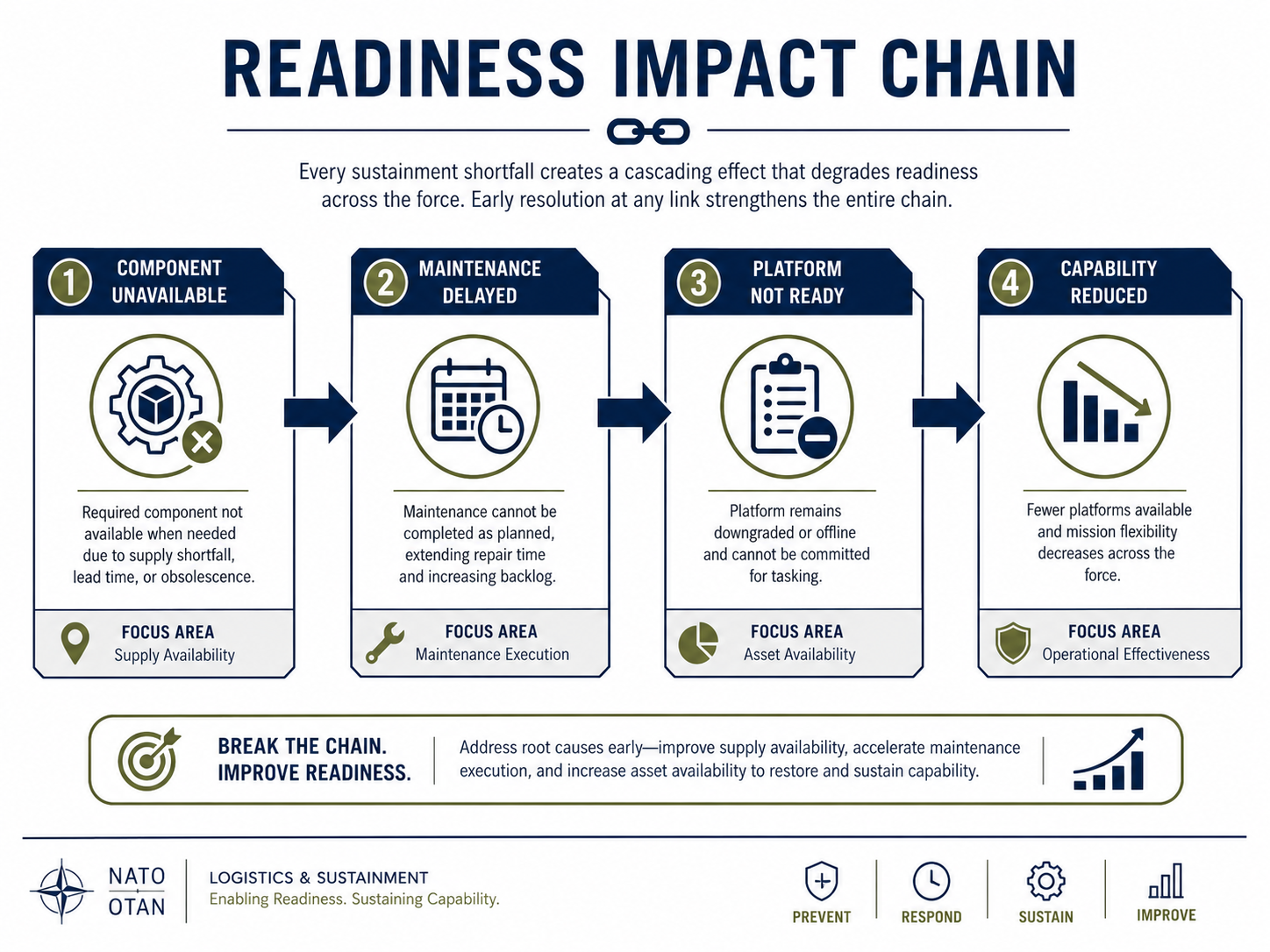
When supply source, configuration, tooling or documentation chain no longer hold, this is not a pure sourcing problem. It becomes a readiness, configuration and sustainment problem.
Part Recovery builds the technical basis for that.
With clear configuration, robust documentation and a qualifiable sustainment and inspection route.
Technical and regulatory initial assessment of the recovery case — with readiness-criticality in view.
Clarification of platform configuration, modification state, data baseline and gaps.
Qualifiable manufacturing and inspection path for small batches and sustainment needs.
Recommendation for a robust acceptance and implementation path in the regulated defence environment.
Cases become critical when supply source, configuration, tooling or acceptance path no longer hold. Classical sourcing is no longer enough. The bottleneck is restoring a controlled, sustainment-capable technical basis.
Legacy programs continue, but OEM support, tooling and documentation are no longer fully capable.
Distant, inactive or politically restricted supply sources push availability into the risk zone of readiness.
Platform upgrades, field modifications, national variants and depot-specific retrofits make configuration a recovery driver.
In defence programs, five recovery situations recur, each triggering its own recovery task.
A component is not available within the required readiness window.
Restore availability without waiting for a fragile or inactive supply chain.
Defence platforms often exist in different modification states. The same part number may not mean the same installed reality.
Restore the component against the actual configuration status of the platform.
The original supplier, tool, fixture, mould or process is no longer available.
Define an alternative manufacturing or repair route — while preserving functional and documentary control.
Older defence components often lack complete material and production documentation.
Build the technical evidence required for a robust recovery decision.
In defence, recovery is also a resilience question. Dependence on distant, inactive or politically restricted supply chains can become an operational weakness.
Build controlled recovery capability for selected critical components before supply disruption becomes a readiness problem.
The offer is described as a clear output — not as a method.
Assessment of data baseline, configuration, supply-chain risk, readiness impact and feasibility.
Building the technical basis from geometry, material, interfaces and inspection criteria — with configuration control.
Definition of manufacturing process, inspection concept, small-batch capability and sustainment logistics.
Recommendation for the robust path to technical acceptance in the regulated defence environment.
Three component families cover the majority of defence recovery enquiries.
Critical: fit, load path, configuration status, material and inspection evidence.
Critical: material, repairability, fatigue load, corrosion, wear and traceability.
Critical: ageing, media contact, temperature, UV, compression set, fire protection and installation geometry.
Not technologies and methods first, but problem, risk, solution and result first.
The question is not: Can someone make this part?
The defence question is: Can this component be restored in a controlled, traceable and readiness-relevant way?
PART RECOVERY supports this transition: from the unavailable component to the mission-ready recovery solution.
Compact, program-near and sustainment-oriented.