PART RECOVERY
Industry · Process

Process Industry Part Recovery

When a part is missing, it is often not the part itself that is at the centre.

In process industry an obsolete component is rarely a pure procurement problem. It almost always depends on concrete operating conditions.

Process Industry Part Recovery
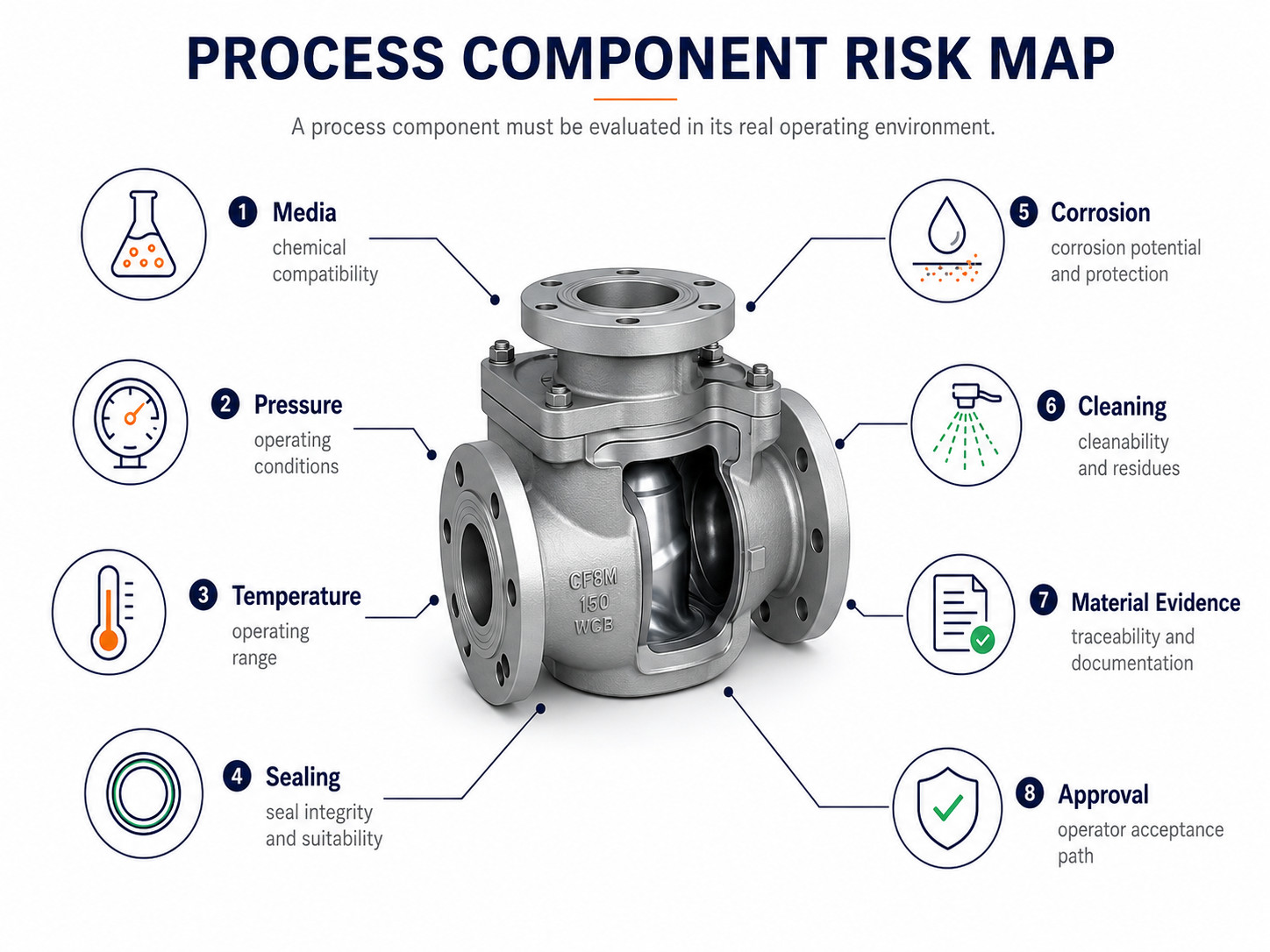
It almost always depends on
  • process medium
  • pressure
  • temperature
  • corrosion
  • erosion
  • tightness
  • cleaning
  • material evidence
  • plant approval

PART RECOVERY supports the technical restoration of no-longer-available components for process plants, production lines and long-life industrial assets.

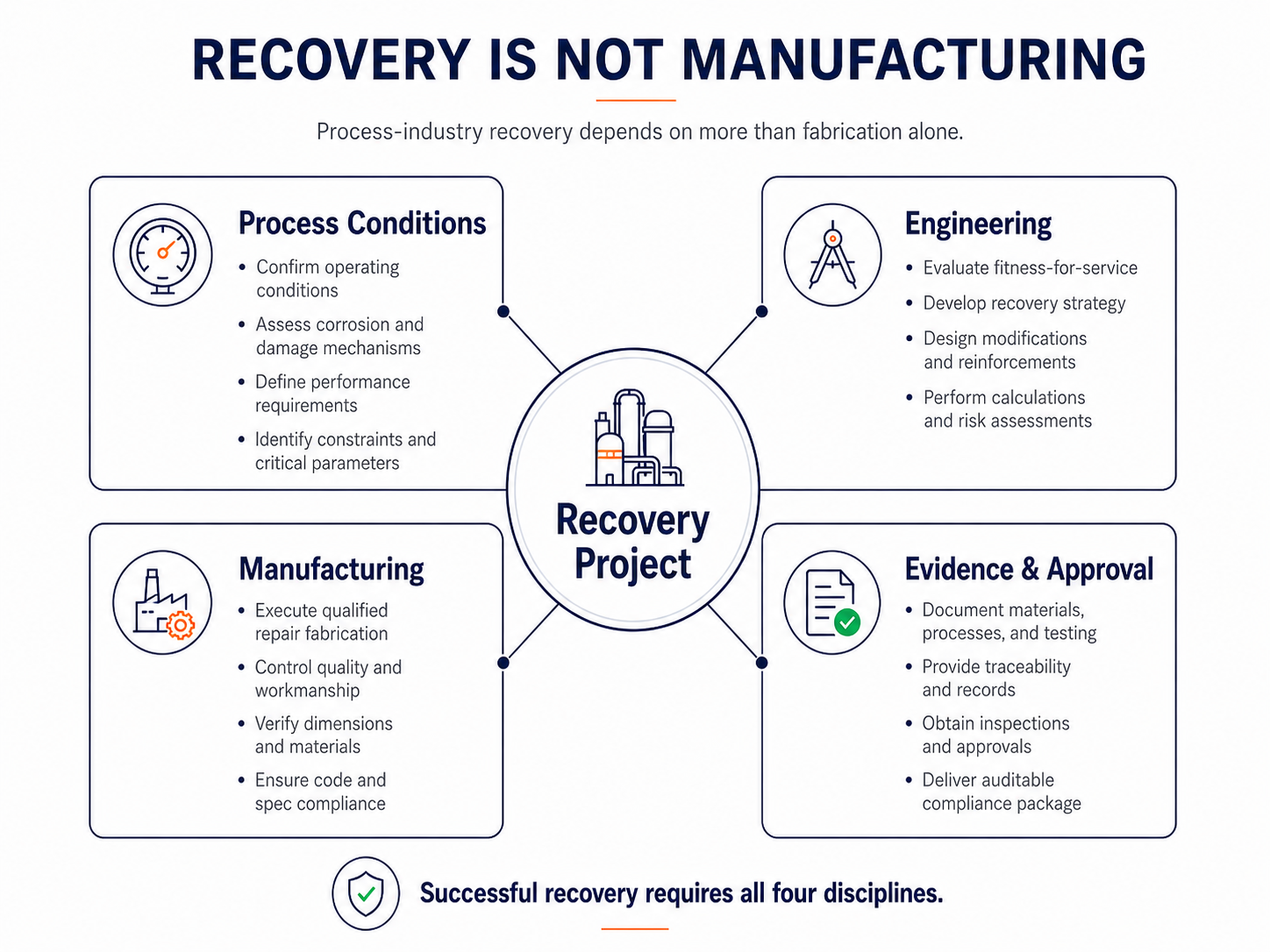
Not as spare-parts trade.

Not as a manufacturing process.

But as a recovery partner for components where function, medium, material, evidence and approval must be considered together.

Recovery within the process window

Why process industry is different

In process plants, it is not only the geometry of a component that decides. What matters is whether the component can be safely and traceably put back in service under real operating conditions.

Why process industry is different
Typical questions
  • Which medium touches the component?
  • Which temperature and pressure ranges apply?
  • Is there corrosion, erosion or abrasion?
  • Which sealing surfaces are function-critical?
  • Which material evidence is required?
  • Which approval is needed for re-installation?
  • Does a change to the plant require documentation?

The bottleneck is often not manufacturing.

The bottleneck is the robust evidence that the chosen recovery solution fits the process.

IEC 62402 · Obsolescence types

Five typical obsolescence types in process plants

Even in process plants, obsolescence cases rarely occur in pure form. We distinguish five types, each with its own recovery task.

1. Material obsolescence

The original material is no longer available, no longer clearly identifiable or no longer sufficiently documented.

Typical cases
  • old material designations
  • missing material certificates
  • unknown alloys
  • no-longer-available casting alloys
  • changed media resistance
  • undocumented coatings
Recovery task

Capture material, assess and prepare a technically justifiable substitution strategy.
2. Media and operating conditions

The component is not to be considered in isolation but in the process window.

Typical influences
  • acids
  • alkalis
  • solvents
  • hydrogen
  • steam
  • abrasive particles
  • cleaning media
  • temperature changes
  • pressure changes
Recovery task

Understand the function of the component under real operating conditions before a manufacturing route is decided.

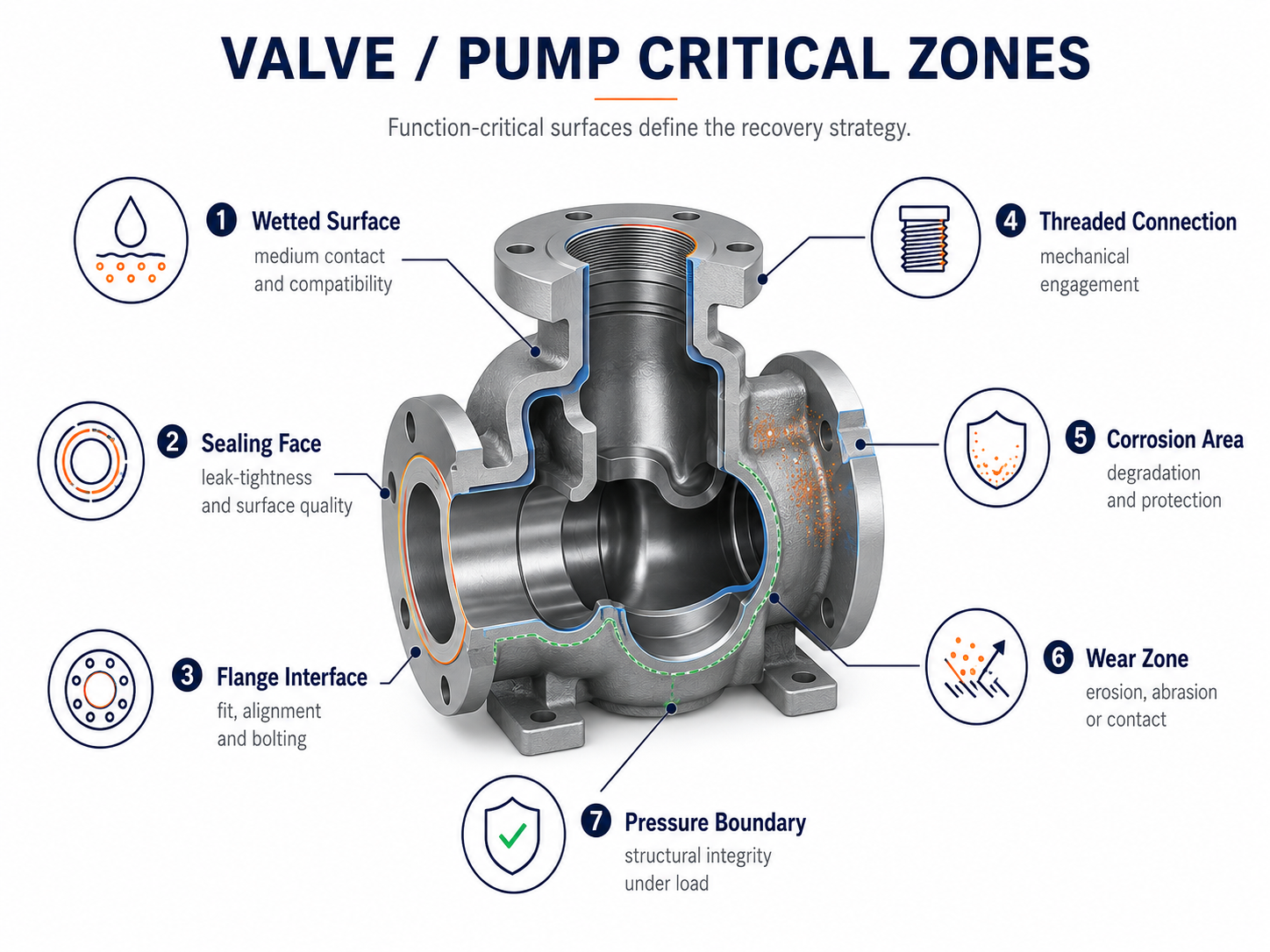
3. Tightness and surface requirements

Many process components do not fail at the base shape but at sealing surfaces, fits and surfaces.

Typical critical zones
  • flange surfaces
  • valve seats
  • housing sealing surfaces
  • bearing seats
  • threads
  • pump internal contours
  • media-touched surfaces
  • corrosion-damaged areas
Recovery task

Identify function-critical areas and restore them specifically.

4. Process obsolescence

The component is known, but the original manufacturing route is no longer available.

Typical cases
  • casting pattern missing
  • forming tool scrapped
  • supplier discontinued production
  • minimum order quantity not economically viable
  • special machining no longer available
  • repair would be more sensible than new procurement
Recovery task

Define an alternative manufacturing or repair route without losing function and evidence capability.

5. Approval obsolescence

The part can technically be replaced, but the original approval path is no longer traceable.

Typical cases
  • old inspection reports missing
  • OEM no longer available
  • operator documentation incomplete
  • changes were not cleanly documented historically
  • new requirements meet old plants
Recovery task

Prepare the evidence package and approval path so a technical decision becomes possible.

Recovery by component group

Typical components

Four component groups recur in recovery enquiries. Each brings its own recovery focus.

Typical components

Pumps

Typical parts
  • impellers
  • casing parts
  • covers
  • bearing brackets
  • wear rings
  • special flanges

Critical often are clearances, surfaces, concentricity, corrosion and media contact.

Valves and fittings

Typical parts
  • bodies
  • seats
  • stems
  • levers
  • bonnets
  • special connections

Critical: sealing surfaces, material, pressure range and media resistance.

Seals and elastomer parts

Typical parts
  • moulded seals
  • sleeves
  • bellows
  • sealing profiles
  • media-touched rubber parts

Critical: medium, temperature, compression set, ageing and installation situation.

Housings and special parts

Typical parts
  • media-touched housings
  • brackets
  • adapters
  • transition pieces
  • guards
  • no-longer-available plastic or rubber components

Critical: the combination of function, volume, material and documentation.

Preparation instead of reaction

Recovery preparedness for process plants

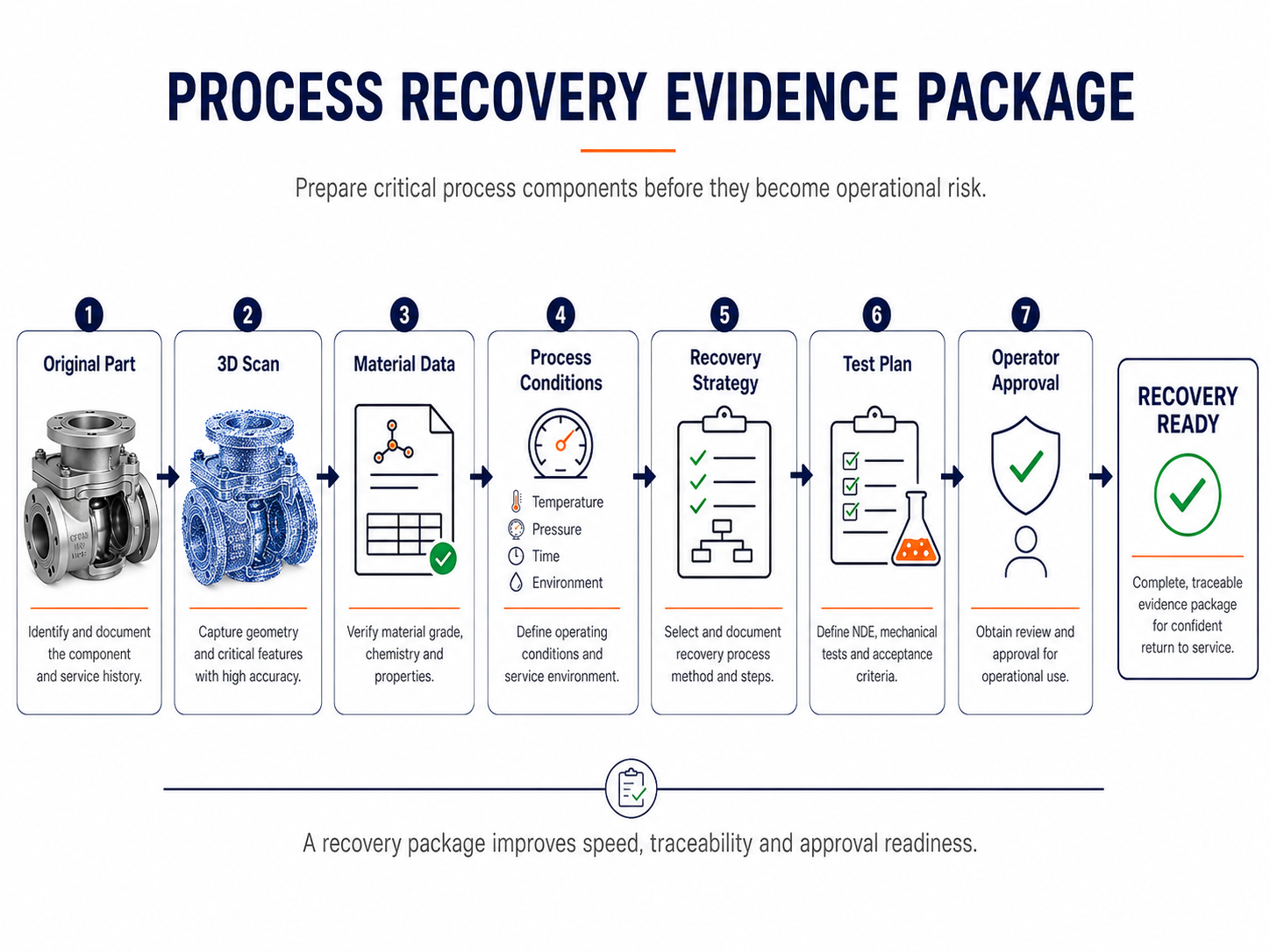
Critical parts should not be assessed only when the plant is down. For selected components, a Process Recovery Package can be built before the emergency.

Recovery preparedness for process plants
A Process Recovery Package may contain
  • photos and 3D scan
  • CAD reconstruction
  • material analysis
  • description of process conditions
  • critical dimensions and sealing surfaces
  • surface requirements
  • inspection requirements
  • reference sample
  • possible manufacturing or repair route
  • documentation for operator approval

The goal is not stock building.

The goal is technical responsiveness.

Prioritisation

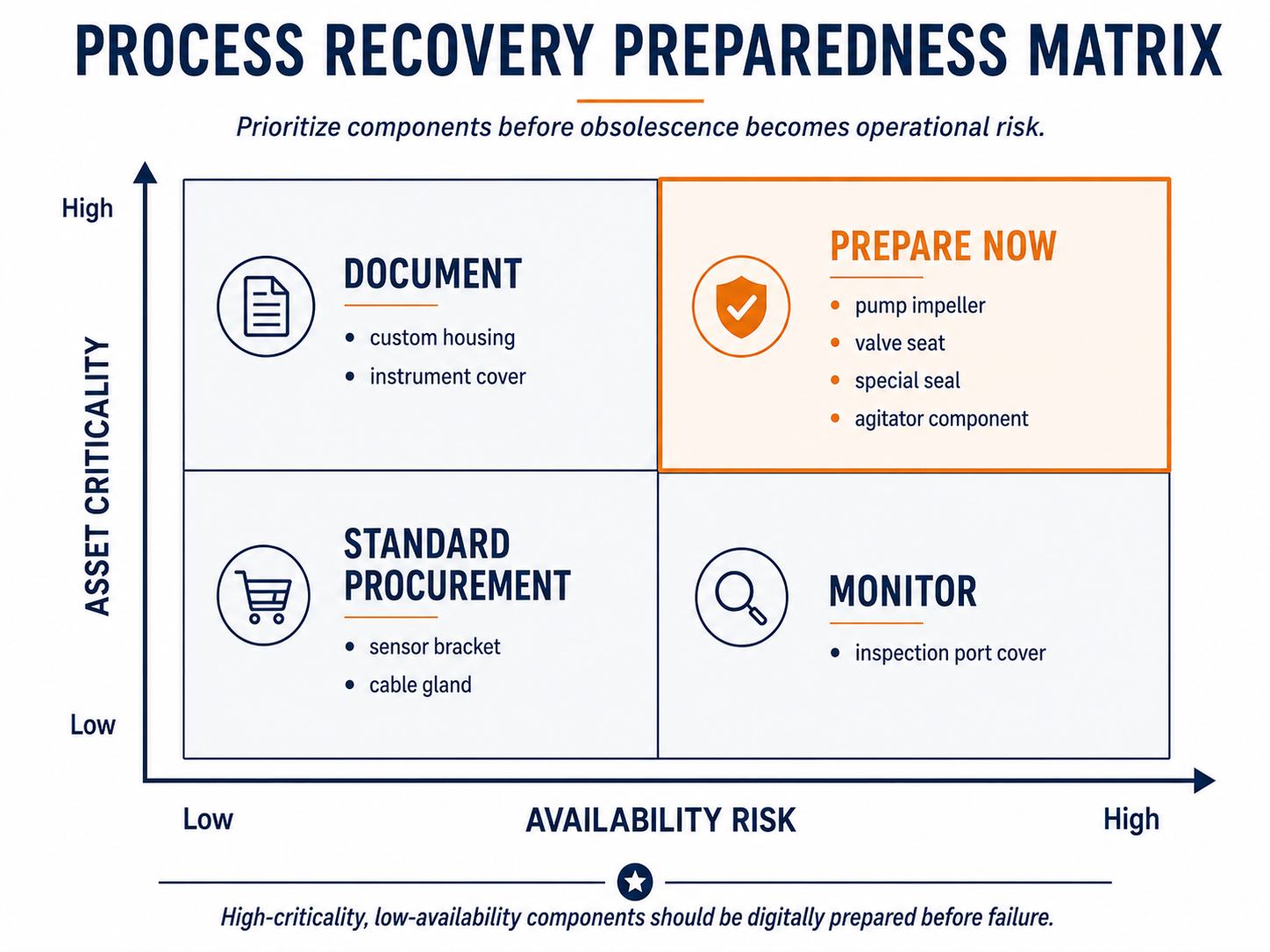
Which parts should be prepared?

Particularly suited are components with the following characteristics.

Which parts should be prepared?
high plant criticality
long lead time
low volume
missing tooling
unclear data situation
unknown material
media contact
tightness requirement
high downtime risk
The right scale

The question is not: Can someone make the part?

The question is: Can the function of the part be restored traceably under real process conditions?

PART RECOVERY supports this transition: from the unavailable process component to a technically justifiable recovery solution.

Recovering critical components starts with an assessment.

Start the Recovery Check or request an Expert Review. We respond within one business day.