PART RECOVERY
Industry · Rolling Stock

Rail Part Recovery

Rail vehicles rarely fail because of a single part.

They fail because of the combination of variant state, material, function, approval and missing re-manufacturing capability.

PART RECOVERY supports the technical restoration of no-longer-available components for existing rail fleets.

Not as a spare-parts trader.

Not as a 3D-printing provider.

But as a recovery partner for components where manufacturing, evidence and approval must be considered together.

IEC 62402 · Obsolescence types

Five obsolescence types in rolling stock

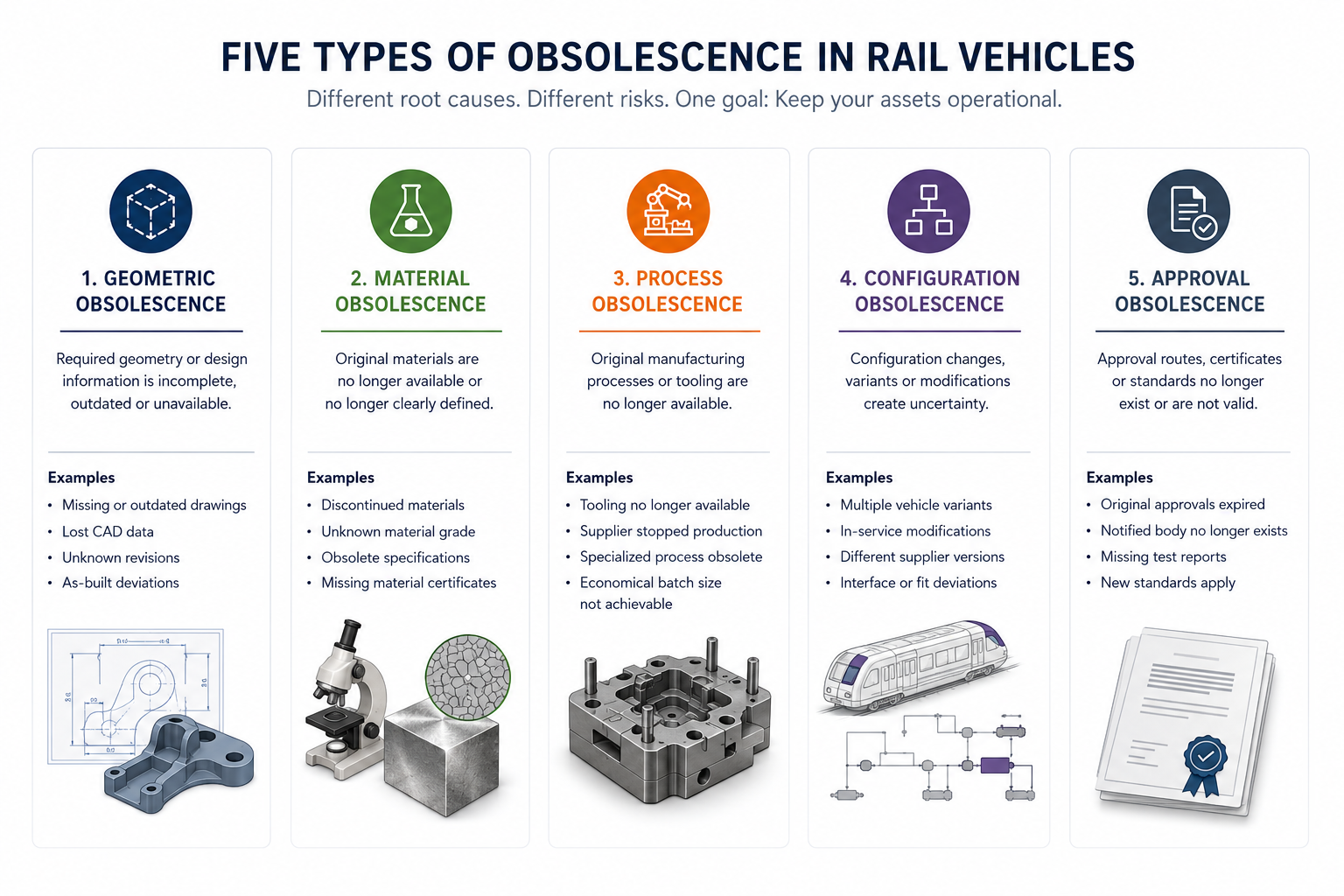
In practice, pure obsolescence cases rarely occur in isolation. We distinguish five types, each triggering a different recovery task.

Five obsolescence types in rolling stock

1. Geometric obsolescence

The part still exists, but drawing, CAD data or revision state are missing.

Typical cases
  • old part available but no reliable drawing
  • multiple vehicle variants in the field
  • retrofits not documented
  • unclear interfaces
Recovery task

Capture geometry, understand function, reconstruct CAD and drawing state.
2. Material obsolescence

The original material is no longer available or no longer clearly identifiable.

Typical cases
  • old rubber and plastic grades
  • no-longer-available casting alloys
  • unknown coatings
  • outdated material designations
  • missing material certificates
Recovery task

Analyse material, assess substitution, prepare evidence.

3. Process obsolescence

The component is theoretically known, but the original manufacturing process is no longer available.

Typical cases
  • casting pattern scrapped
  • injection mould no longer available
  • vulcanisation mould missing
  • supplier discontinued the process
  • minimum order quantity not economically viable
Recovery task

Define an alternative manufacturing route without losing function and approval capability.

4. Configuration obsolescence

The risk lies not in the component itself but in the variant state of the fleet.

Typical cases
  • different vehicle batches
  • retrofits in service
  • multiple supplier states
  • differing installation spaces
  • non-identical part numbers for the same function
Recovery task

Consider component, installation situation and vehicle configuration together.

5. Approval obsolescence

The part can be manufactured, but the original approval path can no longer be reproduced.

Typical cases
  • OEM no longer responsible
  • supplier no longer exists
  • old inspection records missing
  • material or process evidence missing
  • new regulatory requirements meet old vehicles
Recovery task

Build evidence strategy, inspection plan and documentation so a technical decision becomes possible.

Recovery by material group

Material groups with different risks

Each material group brings its own recovery questions. We approach them with separate assessment patterns.

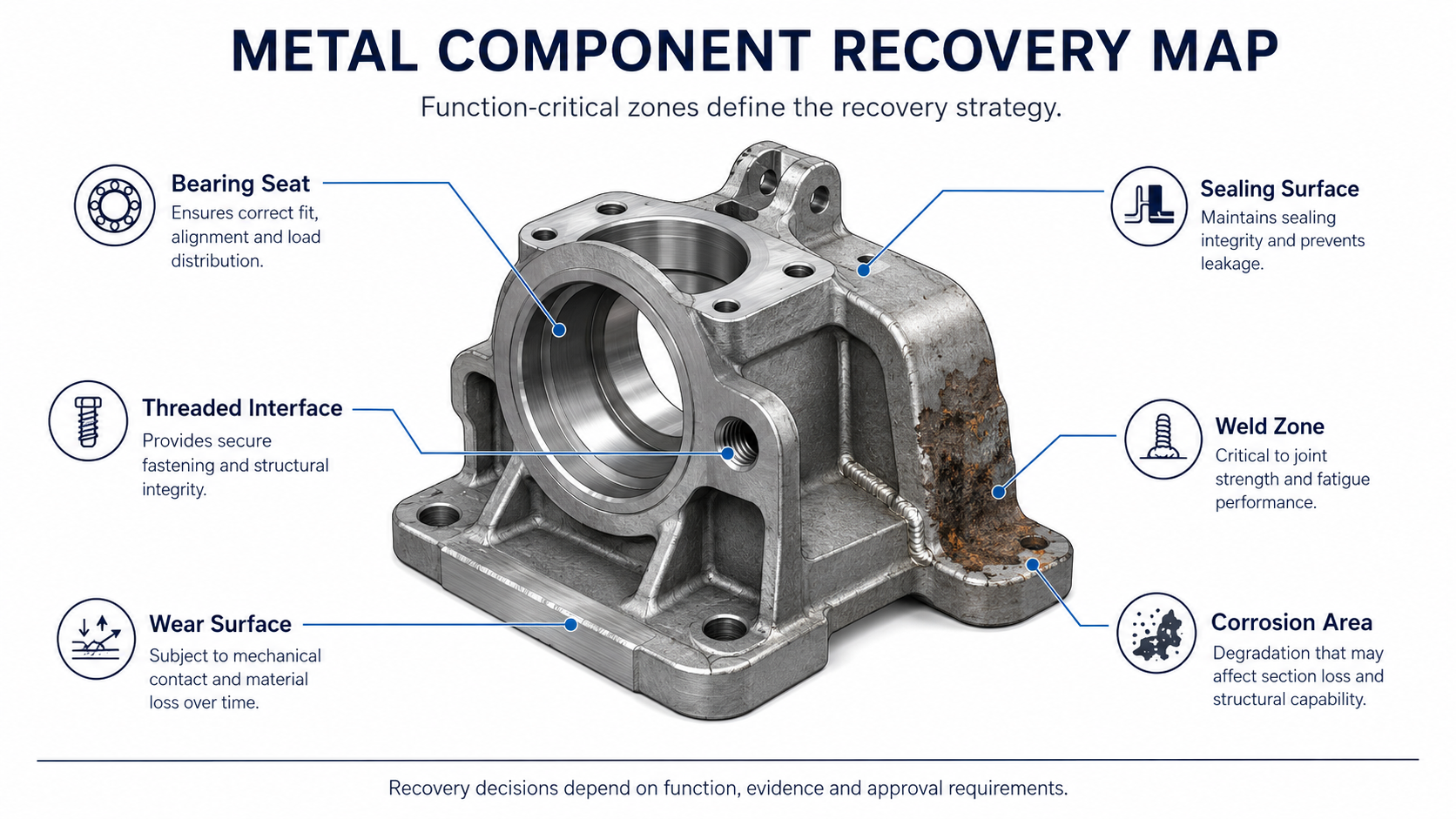
Metal components

Metal components

For metal parts, it is rarely just about the outer shape.

Critical often are
  • mating surfaces
  • bearing seats
  • sealing surfaces
  • threads
  • weld seams
  • wear zones
  • corrosion areas
  • fatigue loading
  • heat treatment
  • surface condition
Typical recovery questions
  • Is repair admissible or re-manufacturing more sensible?
  • Is the material clearly identified?
  • Which surfaces are function-critical?
  • Which non-destructive tests are required?
  • Must welding or repair documentation be built?
  • Which post-processing is mandatory?

Polymer components

Plastic parts often become critical when old materials, fire-protection requirements or tooling are no longer available.

Typical risks
  • embrittlement
  • UV ageing
  • cleaning-agent resistance
  • colour and surface requirements
  • fire-protection requirements
  • no-longer-available injection moulds
  • volumes too small for classic tooling
Typical recovery questions
  • Is this about function or original appearance?
  • Is a tool-less manufacturing route possible?
  • Is a substitute material admissible?
  • Which evidence is required for the operating site?
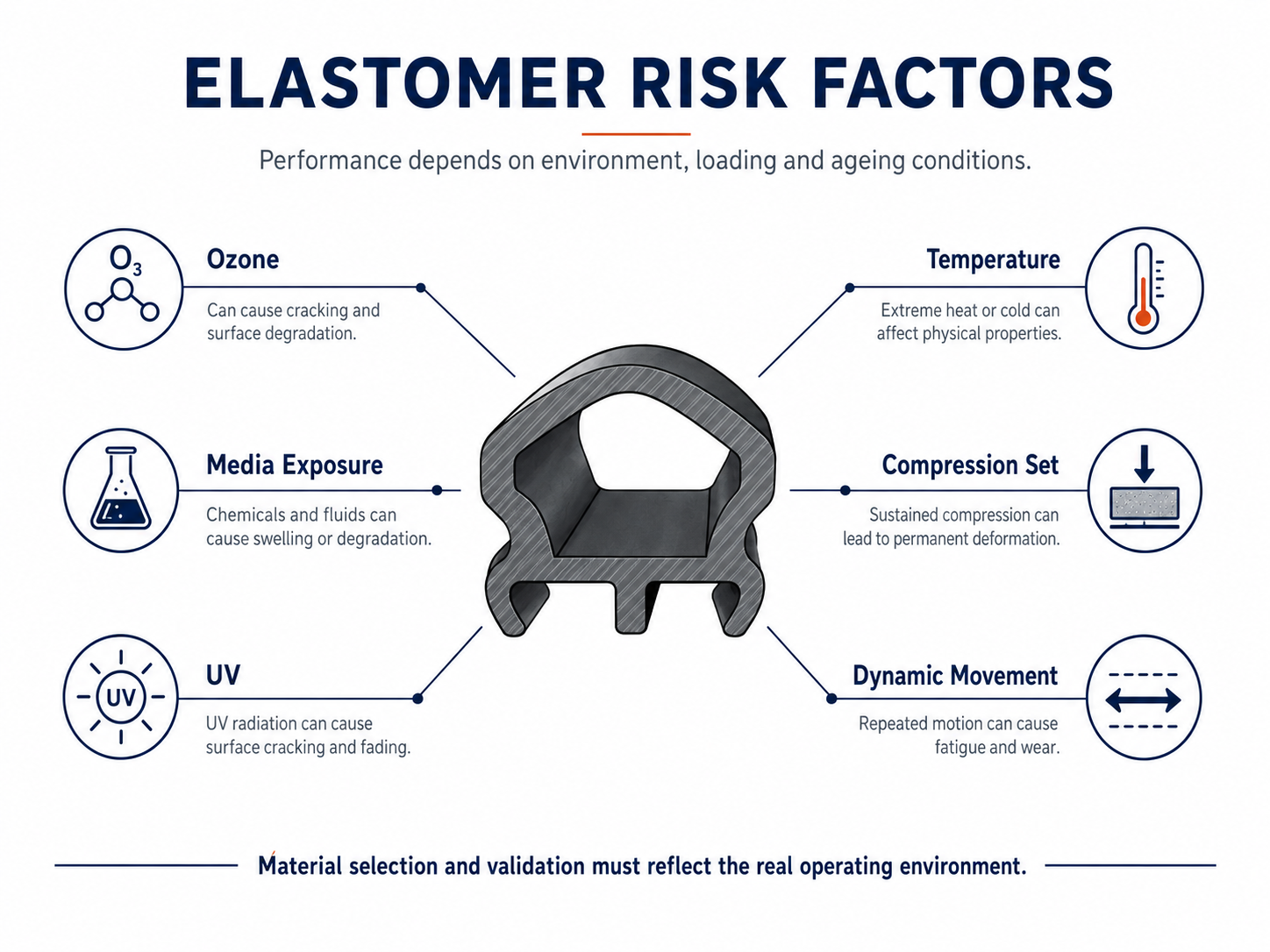
Elastomer and rubber parts

Elastomer and rubber parts

For rubber parts, a blanket service-life view is technically wrong.

Decisive are
  • temperature
  • ozone
  • UV
  • compression set
  • media contact
  • cleaning agents
  • mechanical movement
  • installation tension
  • storage conditions
Typical recovery cases
  • seals
  • bellows
  • sleeves
  • mounts and damping elements
  • cable feed-throughs
  • moulded rubber parts
Typical recovery questions
  • What function does the part fulfil: seal, guide, decouple, protect?
  • Which Shore hardness is needed?
  • Which media attack the material?
  • Is the sample part already aged and therefore geometrically distorted?
  • Should a reference sample be built before the emergency?
Preparation instead of reaction

Recovery preparedness for fleets

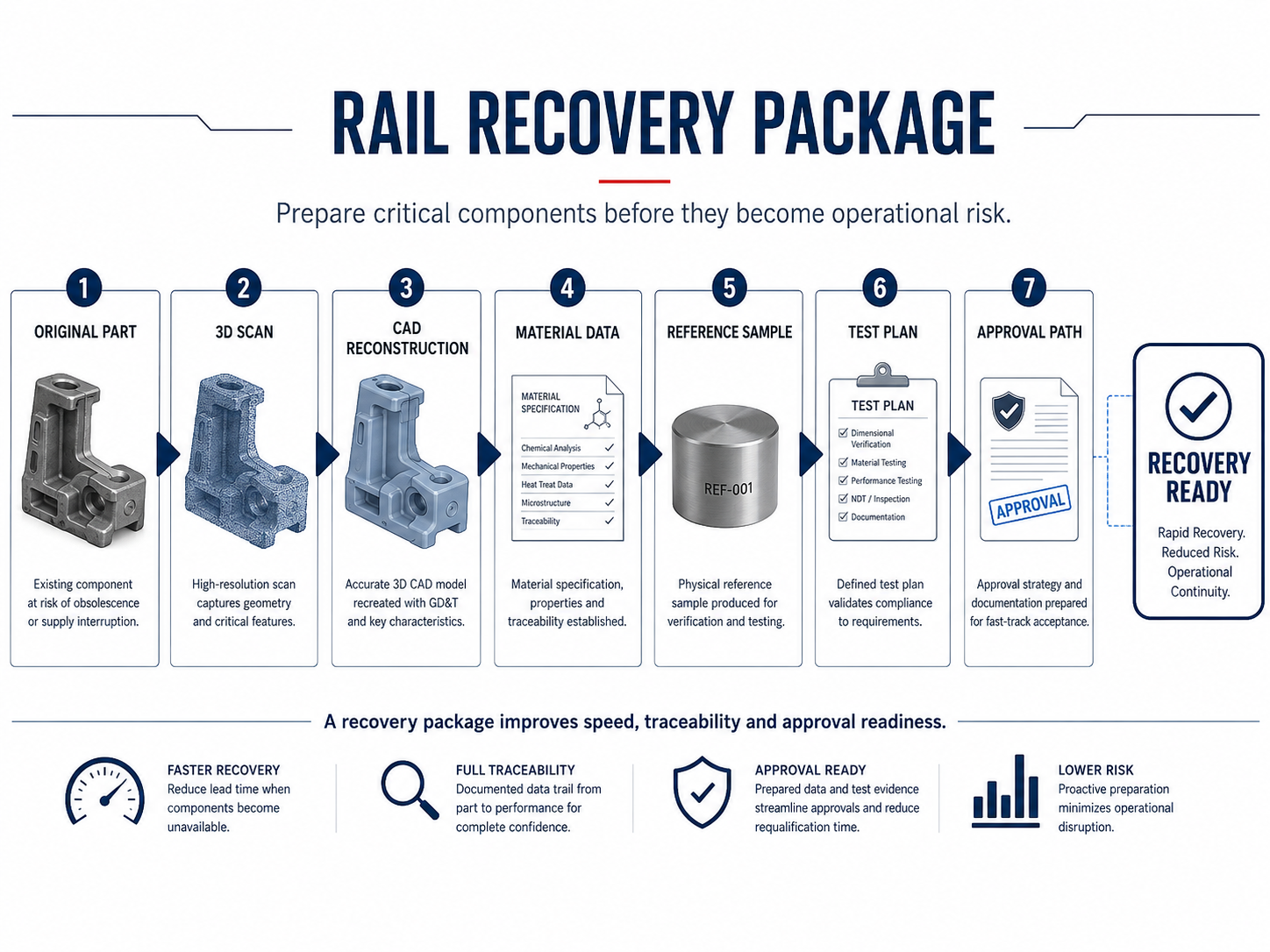
Not every critical part should be assessed only when it is missing. For selected components, a recovery package can be built before the obsolescence event.

Recovery preparedness for fleets
A recovery package may contain
  • 3D scan
  • CAD reconstruction
  • material analysis
  • function description
  • critical dimensions
  • inspection requirements
  • reference sample
  • possible manufacturing route
  • documentation of approval path

The goal is not stock building.

The goal is responsiveness.

Prioritisation

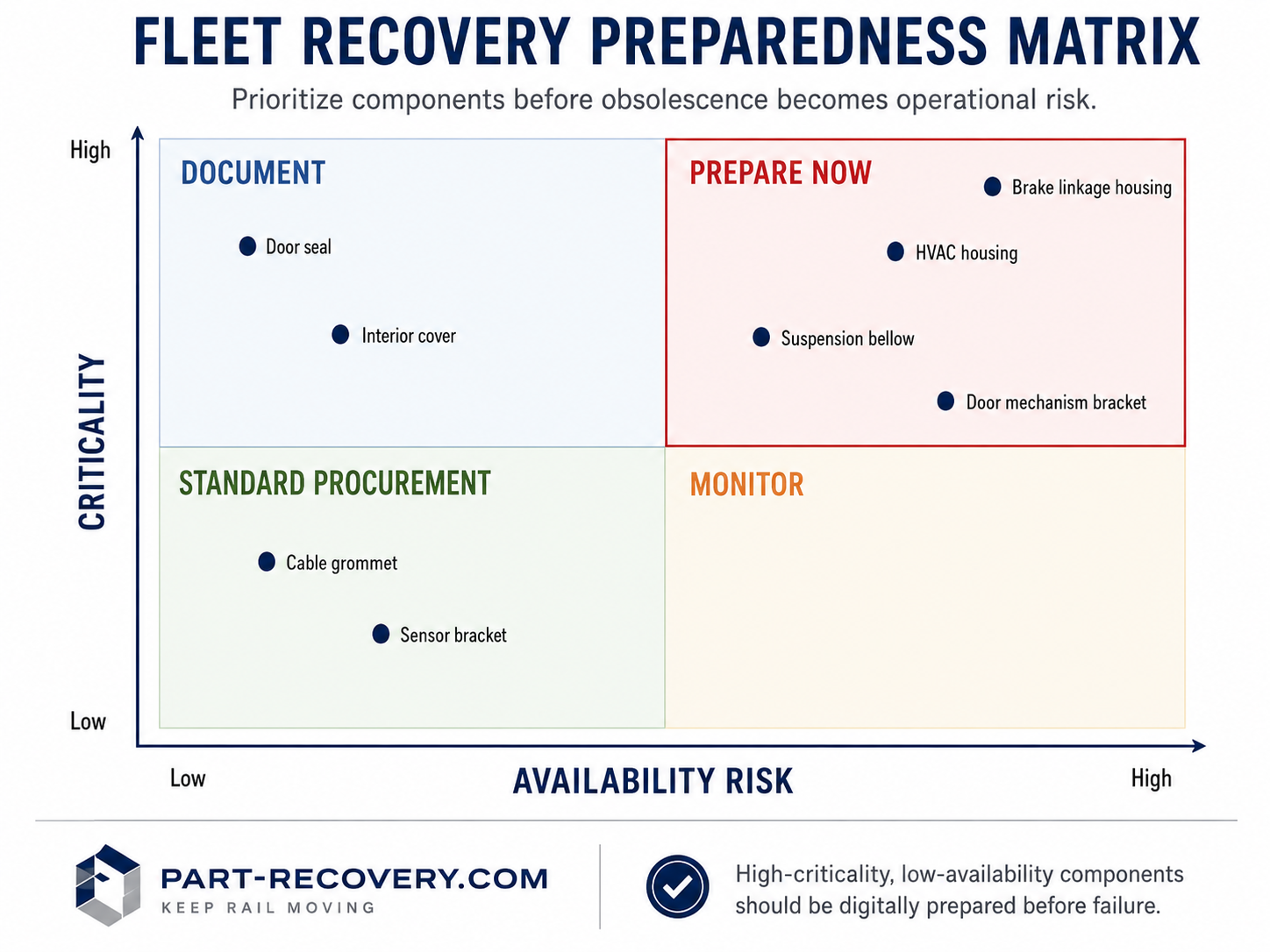
Which parts should be prepared?

Particularly suited are components with the following characteristics.

Which parts should be prepared?
high criticality
unclear data situation
long lead times
low volumes
supplier no longer active
missing tooling
high variant diversity
difficult approval
The right scale

The question is not: Can the part be manufactured?

The question is: Can the part be brought back into the fleet in a traceable, documented and approval-ready way?

PART RECOVERY supports exactly this transition: from the obsolete component to a fleet-ready recovery solution.

Recovering critical components starts with an assessment.

Start the Recovery Check or request an Expert Review. We respond within one business day.